U.S. rental housing demand is driven by more than population growth. Stable employment, household income, housing affordability, and the cost of homeownership all influence residents’ housing decisions. When home prices, interest rates, and upfront purchasing costs remain elevated, some households choose to rent for longer periods. At the same time, continued economic and employment growth can support residents’ ability to pay rent. North Carolina, for example, is projected to add more than 1.2 million residents during the 2020s, creating additional demand for housing.
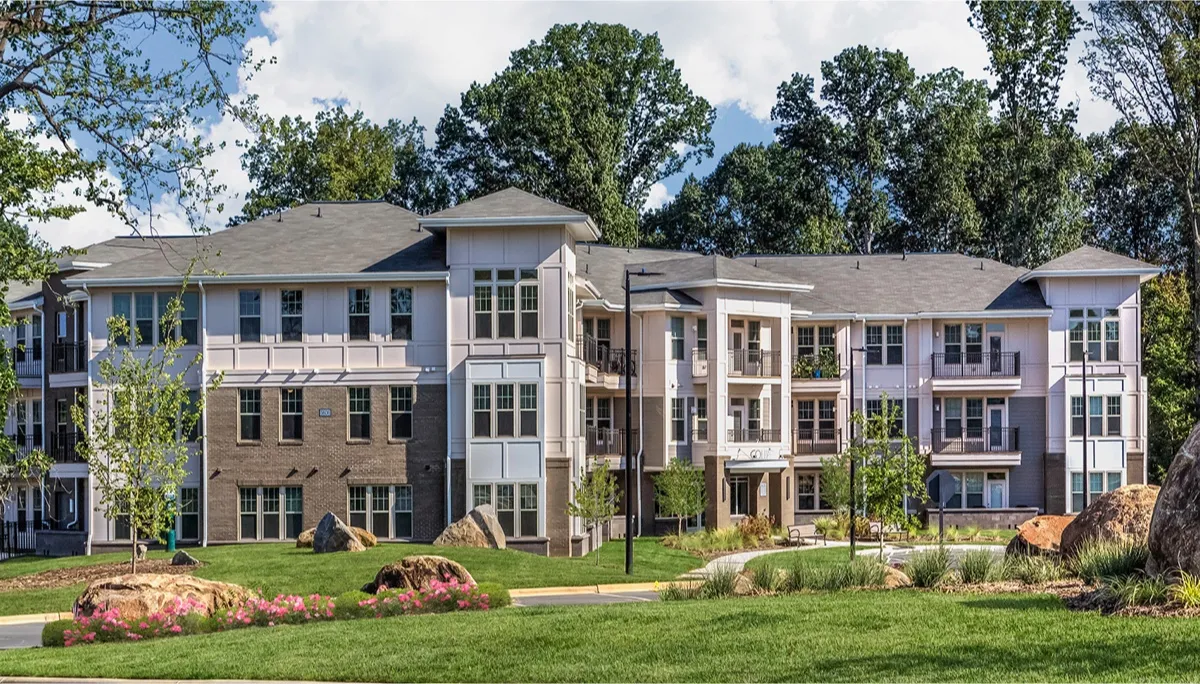
The U.S. multifamily market continues to stand out as one of the world’s strongest real estate investment opportunities. Driven by population growth and rising rental demand, multifamily housing remains a resilient asset built for long-term property appreciation.
The Benefits of Investing in Multifamily Real Estate
Multifamily real estate is one of the most resilient sectors of real estate, supported by consistent housing demand and strong demographic trends.

Higher Yields & Profit Margins
Multifamily developments can deliver strong profit through rental income and long-term property appreciation. New communities in strong-demand markets unlock value and stronger profit potential.

High Demand
With rental rates in the United States at historic highs and high-income households choosing renting over buying, multifamily housing continues to represent a limited-risk investment.

Growth-Focused Markets
By focusing on select U.S. markets with strong population growth, economic expansion, and demand for housing, such as North Carolina, multifamily housing continues to offer opportunities for investment and growth.

Portfolio Diversification
Investing in U.S. multifamily real estate allows international investors to diversify portfolios with tangible, resilient assets.
Investment Process
Our investment process provides a clear roadmap for investors, from identifying opportunities and deploying capital to project completion, distributions, and long-term asset performance.
- Identify Opportunity
- Invest Capital
- Build the Community
- Leasing Begins
- Generate Investor Returns
- Cash Flow Distributions
- Refinance/Sell & Return of Principal to Investors
FAQs
Have questions about investing with Switzenbaum & Associates? Browse answers to questions about our investment process, opportunities, and what to expect as an investor.
Why does multifamily housing have long-term demand in the U.S.?
What macroeconomic factors are reshaping U.S. real estate demand?
The key macroeconomic factors affecting U.S. real estate demand include economic growth, employment, population migration, and housing costs. The U.S. economy continues to expand at a moderate pace, while population and employment growth are supporting housing demand in markets such as North Carolina. At the same time, elevated homeownership costs are encouraging some households to remain renters for longer periods.
What are the core sources of returns in U.S. real estate investing?
Real estate investment returns generally come from three sources: operating cash flow, asset appreciation, and financing efficiency. Rental income generates ongoing cash flow, while increases in occupancy, rents, or operating efficiency can increase NOI and potentially enhance the property’s value. Appropriate use of debt financing can also improve equity efficiency when the property’s return exceeds the cost of financing.
How can investors determine whether a real estate market has long-term investment potential?
Investors should evaluate a market based on several key indicators: population growth, employment growth, rent growth, occupancy, and housing supply. A market with sustained population and job growth, stable occupancy, room for sustainable rent growth, and a healthy balance between housing supply and demand may have stronger long-term fundamentals.
Why is North Carolina becoming an important U.S. real estate investment market?
North Carolina has experienced strong population and economic growth. The state is projected to add more than 1.2 million residents during the 2020s, nearly twice the approximately 614,000 added during the 2010s. The state also benefits from a diversified economy spanning technology, healthcare, life sciences, advanced manufacturing, aerospace, and education. In markets such as Burlington, access to the Piedmont Triad and Research Triangle further connects residents and businesses to major employment centers.
Why is multifamily housing an important asset class in U.S. real estate investing?
Multifamily housing benefits from the fundamental need and typically generates rental income from a diversified base of individual residents rather than relying on a single tenant. Population growth, employment expansion, and rising homeownership costs can support rental demand. Multifamily properties also benefit from economies of scale, allowing hundreds of units to be managed through a centralized leasing, maintenance, and property management platform.
How does the financing structure affect real estate investment risk and returns?
A real estate project’s capital structure typically consists of debt and equity. Debt financing can reduce the amount of equity required and potentially enhance returns when the property’s return exceeds the cost of financing. However, higher leverage also increases financial risk because debt service must be paid regardless of operating performance. For Sycamore at Burlington, approximately 71.7% of project funding comes from a HUD construction loan, 15% from other financing, and 13.3% from equity.
Why is HUD financing important for multifamily development?
HUD 221(d)(4) is an important long-term financing program for eligible multifamily housing developments. Its long-term, fixed-rate structure can help reduce exposure to interest-rate volatility and refinancing risk. HUD underwriting also evaluates factors such as market demand, rental potential, development costs, projected operations, and the developer’s ability to execute the project. For Wutong Garden Phase V, HUD financing represents approximately 71.7% of total project funding.
How can investors evaluate a real estate developer’s track record?
Investors should consider a developer’s experience, scale, completed projects, and ability to execute across the full real estate lifecycle. Switzenbaum & Associates’ management team brings more than 100 years of combined experience, has managed more than 10,000 apartment units, and oversees more than $1 billion in real estate assets. These metrics provide context for evaluating the team’s experience and execution capabilities.
How can historical project performance help evaluate a new investment opportunity?
Historical projects can provide investors with a useful benchmark for evaluating a new opportunity and the development team’s execution capabilities. For example, Sycamore at Tyvola and The Osprey at Lake Norman were sold for approximately $96.3 million and $116 million, respectively, with IRRs of 21.3% and 23% and occupancy rates of 95% and 96%. Sycamore at Christenbury and Sycamore at Monroe provide additional data points across development, construction, leasing, and operations. Historical performance does not guarantee future results, but it can provide a valuable basis for evaluating assumptions and execution capabilities.
News & Press
Stay informed on our projects, U.S. multifamily market trends, and company news from Switzenbaum & Associates.
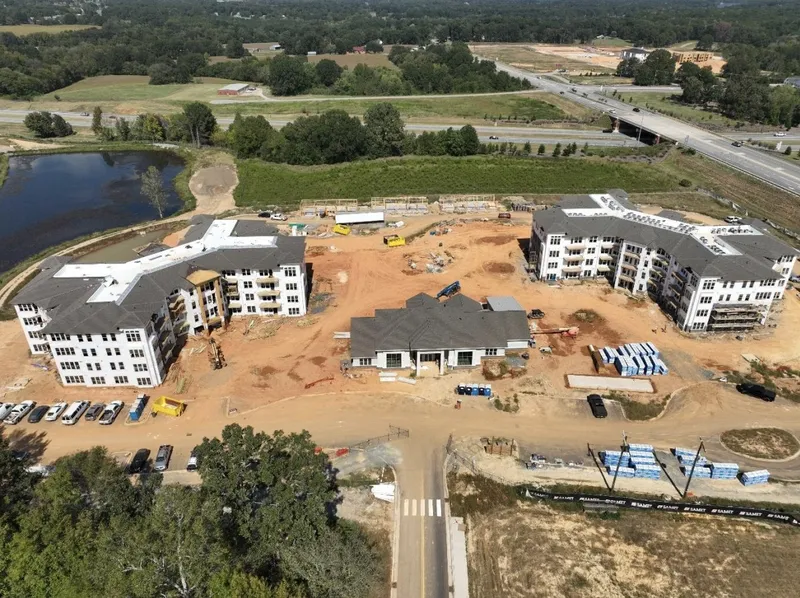
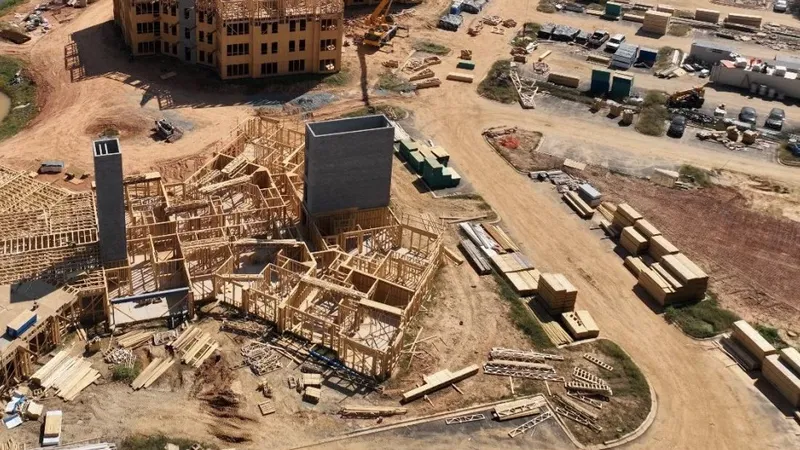
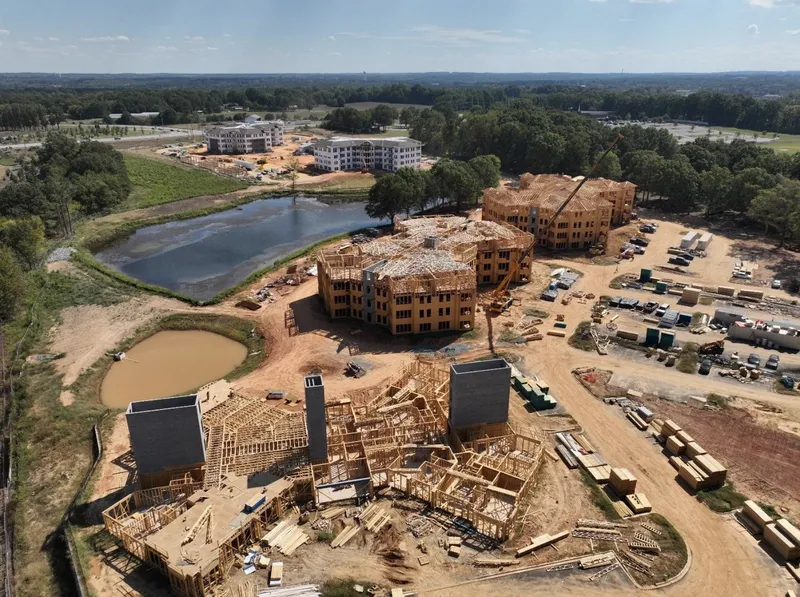
Switzenbaum & Associates Advances $80 Million Sycamore at Monroe Development in North Carolina
Read More: Switzenbaum & Associates Advances $80 Million Sycamore at Monroe Development in North Carolina275-Unit Sycamore at Monroe Apartments Rising Near Expressway With $48M Loan
Read More: 275-Unit Sycamore at Monroe Apartments Rising Near Expressway With $48M LoanDeveloper brings $80 million apartment complex to Monroe
Read More: Developer brings $80 million apartment complex to Monroe
Explore Investing with Us
Connect with us to learn more about current and upcoming multifamily investment opportunities.
Thank you for your inquiry. Your message has been received and a member of our team will be in touch soon.